
The 4 elements of modern messaging middleware
Your legacy messaging middleware wasn’t built to communicate with today’s cloud-native, IoT and mobile technologies. It wasn’t built for modern microservices, event-driven architectures, or for the creation of an event mesh. And it doesn’t play well with open source. Today’s middleware must be able to do the following:

Plug into your existing apps and infrastructure on-premises
Let’s be real: there’s a good chance a hybrid cloud architecture will be your end state. And even if it isn’t, eliminating or migrating legacy technologies to the cloud doesn’t happen overnight.

Integrate your cloud-native apps and cloud services
And yes, this includes your containerized apps and your iPaaS. But connecting these things is only half the battle. Your messaging middleware should enable robust and event-driven data transport.

Supercharge IoT communications, and more
Your middleware should handle the highly scalable and efficient communication between IoT and mobile devices (thousands, millions and maybe billions of them), cloud apps and back-end systems.

Create digital transformation responsiveness
As your digital transformation (and the market) unfolds, your messaging middleware should move at the speed of change in enterprise IT without locking you in to any vendor or technology.
The future of messaging middleware
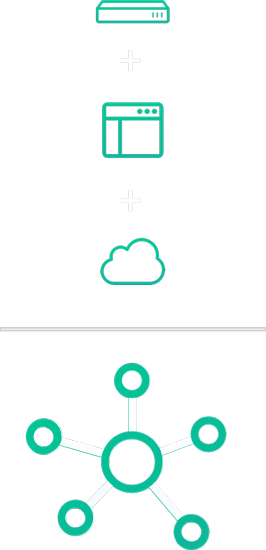
Hardware. Software. Cloud. PubSub+ is messaging middleware for distributed, event-driven enterprises.
Gartner refers to PubSub+ as an advanced event broker, which means it supports the publish-subscribe messaging pattern (among others), can be managed in the cloud and deployed in all environments (public cloud, private cloud, on-premises), and it provides all the enterprise-grade features and capabilities provided by traditional message-oriented middleware, and then some.
Innovation takes collaboration. Here are a few of our partners:




PubSub+ capabilities




But there’s one more thing (well, four)




Our clients get the high rate, low and consistent latency they’re used to receiving from their messaging middleware on premises, but in a messaging layer that extends beyond their legacy infrastructure, to their public and private cloud infrastructure, the IoT and mobile technologies.”